kineara

Motivate to Educate: End of year reflections

Motivate to Educate: End of year reflections

It’s the end of term and time to showcase another brilliant set of M2Es delivered by our dedicated, school-based practitioners. A big thank you to our partner schools, families and pupils who’ve made it all possible!

Primary pupils in Harrington Hill and Redlands Primary School celebrated after taking part in Motivate to Educate, a 15-week intensive and tailored intervention that aims to build confidence, motivation and wellbeing among pupils.

The pupils at Harrington Hill took part in a certificate ceremony led by Kineara’s school-based practitioner, Davinia, and attended by their parents and carers, whilst pupils at Redlands celebrated with a picnic and family activities delivered by practitioners, Gail and Rujia. They were the latest of over 60 local primary school pupils and their families to take part in M2E, which so far has achieved an 86% increase in emotional wellbeing and confidence among pupils.

Harrington Hill

Harrington Hill Primary in Hackney, East London, has been one of Kineara’s strongest partnerships in the last few years and is a testament to the school’s dedication to care for its pupils and the school community. This year, our partnership has led to us being shortlisted as a finalist at the Education Resource Award 2019.

Having worked with four families in our latest cohort, Davinia said: “The school had various concerns about the pupils, ranging from disruptive behaviour and emotional instability to lack of confidence and issues in the home which inflicted on their studies and wellbeing.”

Davinia utilised a wide variety of tools in tackling worry and anxiety in pupils, such as the use of bubble wrap, tailor-made emotion cards and daily post-it notes for both the child and parent to express how they are feeling. “In this cohort, art making has been a useful tool for helping children access and express difficult memories. Using materials that allow a child to make mess, should they want to, creates a freedom to access these memories and to begin to make sense of them.”

Regarding the support, Harrington Hill have said: “We could not provide the much-needed level of support we do for our whole school community without Kineara’s M2E. Their work places the child completely at the centre and nothing is too much trouble. We can honestly say we’d be lost without the service, as would our pupils and their families.”

Redlands

Redlands Primary in Tower Hamlets, East London, has been another fantastic collaboration between ourselves, the school and the families we’ve worked with. Over the last year we’ve supported 15 pupils and their families, including 10 families who attended our drop-in, three parent workshops, and we’ve also provided therapeutic counselling for three families who needed more in-depth mental health support.

Talib*, one of the pupils from the latest cohort, was referred to M2E after concerns about challenging behaviour at home which was affecting his engagement and progress in school. As a young boy who has autism, the school was keen to provide extra support for Talib and the whole family in understanding autism and developing effective tools and strategies to support his wellbeing.

Through a variety of 1:1, group and parent support sessions, practical and therapeutic exercises, Gail worked with Talib to develop his emotional awareness, wellbeing and understanding of autism, so that he can build on his strengths and be proud of who he is. Living in a small overcrowded flat with another family, Gail also supported Talib’s family in completing a health assessment about their living situation, which led them onto a priority band for a new home. Recently, we found out that the family will be moving into a new 3-bedroom flat – a great achievement which we hope will not only provide space for Talib to grow and express himself freely, but improve the wellbeing of the whole family.

Reflecting on the case Gail said: “What worked extremely well was the support from the school and their drive to keep pushing for Talib and the whole family to succeed. Giving the child space to express how they’re feeling and showing parents different ways of changing their responses and routines at home, can make a real impact in improving wellbeing and enhancing positive relationships.”

Our impact

So far, we’ve delivered a total of 63 M2E programmes with three school partners and we’ve improved emotional wellbeing and confidence in 86% of cases. In addition, we’ve seen a 69% increase in family wellbeing and communication, supported 76 drop-in attendees, and addressed 29 different issues from housing to mental health and wellbeing.

Each intervention is tailored to specific need and, overall, families we work with say their children’s wellbeing, communication, and emotional awareness significantly improve after taking part in the programme. Teachers notice improved behaviour and engagement in the classroom, and our pupils experience real improvements in stress, anxiety, motivation and confidence, which impacts positively on their education.

M2E will continue to be delivered to pupils at Harrington Hill Primary in the new school year, with additional wraparound services that include drop in support for parents and for school staff.

We are currently able to partner with schools in the Greater London area. To learn more about M2E or partner with us, contact: info@kineara.co.uk

Read the M2E press release.

*Note: Names have been changed to protect pupil’s identity.

Posted by kineara in Community, Education, Impact
How self-determination can impact wellbeing

How self-determination can impact wellbeing

From poverty to income inequality, and rising mental health concerns to the housing crisis, many of the core challenges we face today stem from an economic system that maintains inequality and often hits the most vulnerable hardest. However, studies show that feeling engaged and in control of our lives can elevate our wellbeing and development, despite our circumstances.  

Self-determination, which refers to the process by which a person feels in control and empowered over their own life, can significantly improve mental health and wellbeing, according to growing research.

Psychologists posit that self-determination can lead to more positive, sustainable outcomes, including in mental health and emotional wellbeing, resilience, and healthy social and psychological development. In fact, the capacity to make the right decisions for one’s wellbeing and feeling empowered to do so, can result in people leading longer, healthier and happier lives.

Alternatively, feeling a continued lack of self-control and uncertainty in our lives can have far-reaching consequences for our mental health and wellbeing, from the way we respond to and address challenges in our lives, to how we operate in our community and broader society.

At the individual level, people who feel they have lower control over their day-to-day lives are more likely to experience a chronic stress response; their ability to cope suffers and feelings of insecurity about the world often heighten.  This stress response can lead to poorer mental and physical health, which are experienced at a greater rate by disadvantaged and vulnerable communities.

Although the link between poorer health and socio-economic factors such as low income and educational inequality is well established, the ‘perceived’ lack of control on a micro or individual level, can too, lead to feelings of disempowerment, and in turn, poorer wellbeing outcomes. This is often marked by poorer mental health including depression and anxiety, which in turn, influences health damaging choices like smoking or increased alcohol consumption. Studies suggest that those who exercise control over their lives and make decisions in their best interest, even small day-to-day decisions, are more likely to cope better through stressful situations.

The impact of poverty and structural inequalities

A recent report by George Bangham at the Resolution Foundation suggests there’s more to life than economics, but that it still really matters. Crucially, the report identifies the need for safety, security and stability, particularly in housing and employment.

Bangham presents several examples highlighting the need for security in life, including housing tenure being strongly associated with higher wellbeing and that whilst a job may increase wellbeing, the well-being drop from losing a job is bigger than the wellbeing gain from getting into work.

Among its findings the report concludes: “The best prospects for policymakers targeting future increases in national wellbeing lie in raising job quality, raising incomes, particularly at the lower end, and policies to improve security in the housing market.”

Further studies show that poverty– which today may likely include continued low income and in-work poverty levels – has an impact on the brain and its development due to chronic stress causing toxicity. This, in turn, can impact decision making and cause a perceived lack of control over one’s life.

Notably, those who feel they have little control over their circumstances tend to find greater outer rewards in money and grades, while those who feel in control are motivated more by the inner sense of mastery and satisfaction, according to psychologist Richard deCharm. This highlights the causal nexus between poverty and a perceived lack of control, and those with a perceived lack of control finding greater reward in external conditions such as job and housing security or higher income.

Developing self-determination

With the proportion of people experiencing ‘deep poverty’ in London having increased in recent years and many workers still trapped in precarious jobs and insecure housing, we believe developing resilience and self-determination to address and work through the daily challenges is more important than ever.

Whilst there are things that we can’t change immediately like the socioeconomic context in which we live, there are things we can change. By focusing on what we can change including our responses to situations and the decisions we make, we can support our own wellbeing and positively impact those around us.

Having the right support is also key. Studies have demonstrated that having close friends and family has far-reaching benefits for your mental and physical health, whilst social isolation are loneliness lead to a greater risk of poorer mental health and wellbeing. On a broader level, while policy changes are essential, it is also important that vulnerable people have access to the right support. Findings from a landlords’ focus group conducted by Kineara, found that 80% of landlords believe their tenants would benefit from financial support and mediation, and 60% say their local council does not provide, or could provide further adequate support for tenants.

Holistic practice means understanding how these things intersect; using a holistic, strength-based, person-centred support enables Kineara’s practitioners to meet the needs of the individual or family and build on their strengths to maintain positive outcomes. By working 1:1 starting with where people are and working towards goals that individuals and families choose and aspire to achieve themselves, the tailored approach recognises the importance of strengthening the individual, the family unit and the community, whilst also taking their socio-economic situation into consideration.

Director of Kineara, Maria Morgan, adds: “We know that homelessness can affect someone’s mental health, we know that poverty can affect someone’s mental health, we understand that. So, it’s important for us to recognise those things because it can be a barrier for someone moving on, finding a job, it can be a barrier in so many ways. There’s nothing stronger than recognising and accepting where you are to move forward.”

Developing a level of self-determination is vital for self-development. Being able to guide the course of your life, despite the circumstances, takes focus, proactivity, self-confidence and a willingness to work through adversity. Recognising that you and only you have the power to change where you are in life: mentally, emotionally and practically, is a constant pursuit and a powerful tool for change.

Posted by kineara in Community, Latest, Research
Primary pupils in Hackney celebrate after completing educational and emotional support programme

Primary pupils in Hackney celebrate after completing educational and emotional support programme

 22 July 2019

Motivate to Educate pupils in Harrington Hill took part in certificate ceremony to celebrate their progress following intensive support.

Pupils at Harrington Hill Primary School in Clapton, Hackney, have celebrated the end of an intensive support programme dedicated to promoting wellbeing for themselves and their families in an event in the school.

The pupils, all aged between 6 and 11, took part in a certificate ceremony led by Kineara’s dedicated support practitioner in the school, Davinia, and attended by their parents and carers. The programme provided 15-week intensive support for emotional wellbeing, family relationships and communication, peer relationships, and practical support for the family.

Regarding the support, Harrington Hill have said: “We could not provide the much-needed level of support we do for our whole school community without Kineara’s M2E. Their work places the child completely at the centre and nothing is too much trouble. We can honestly say we’d be lost without the service, as would our pupils and their families.”


These are the latest of nearly 60 local primary school pupils and their families to take part in Motivate to Educate (M2E), an educational support intervention for vulnerable pupils designed and delivered by Kineara, a Tower Hamlets-based community interest company that delivers support interventions to schools, housing associations and local authorities across London. Early in 2019, Kineara’s work with Harrington Hill was shortlisted as a finalist in the Educational Resources Awards.

At a time when the mental health and emotional wellbeing of primary school pupils is of increasing concern, M2E aims to promote emotional awareness, communication and an understanding of emotions and expression, and has improved emotional awareness in 86% of pupils who have been supported by the programme. It aims to improve family wellbeing also, focusing on things like family routines, quality time, and relationship building, and improving wellbeing in nearly 70% of families.

One mother whose daughter took part in the programme said of her daughter: “She has opened up, she’s a different person. Now she’s learnt how to express herself. She’s learnt how to be more self-confident. She’s learnt so much and she got high grades in her exams. The teachers even said…she’s a completely different child, she’s just not the same. It’s amazing!”

The programme has also offered therapeutic counselling for parent who needed more in-depth mental health support, as well as providing practical support for housing concerns in nearly a third of the families on the programme, such as rent arrears, overcrowding and eviction threats. Supporting families into improved living environments can have important benefits for pupil’s wellbeing, and in turn, their ability and motivation to learn in school.

M2E will continue to be delivered to pupils at Harrington Hill Primary in the new school year, with additional wraparound services that include drop in support for parents and for school staff.

ENDS

FURTHER NOTES


About M2E

M2E works with pupils who are struggling to engage with their schooling to identity and explore where these challenges have come from. It provides key worker 1:1 support to their parents and carers, to explore how factors at home may be effecting parent’s ability to engage with their children’s education, including housing issues, financial concerns, relationship breakdown in the family, mental health and health support, and more. It offers a holistic approach to support, understanding that stable, healthy and happy family environments are vital when it comes to children’s educational attainment at school.
Find out more here: www.kineara.co.uk/m2e

About Kineara

Kineara is an award winning community interest company that provides tailor made support services to families and individuals in their community, in the areas of housing, education and employment. We support people to recognise their strengths and resilience in the face of challenging times. We do this by listening to what matters, reconnecting people to their passions and exploring how they might make the most of opportunities to impact their own world and the world around them. All of our support services area holistic and tailored to individual needs.

You can find out more about M2E here and the impact we’ve had here.

For quotes, high resolution photo files and more information, please contact Kineara’s Communications Lead, Melanie:
msinghji@kineara.co.uk
020 8976 1450

Posted by kineara in Community, Education, Latest
Our Impact Report 2019 is now published

Our Impact Report 2019 is now published

14 June 2019

Each year, we are committed to providing a report into our impact and our progress towards our key aims and mission. We are happy to share with you our Impact Report 2019, which collates the results from this year’s internal evaluation of our programmes.

2018 was a pivotal year for our organisation, with a new housing programmes as well as additional school services that have expanded our reach and provided school essential wraparound support. This work delivered against 4 key objectives:

  • To prevent evictions homelessness and housing insecurity of vulnerable people
  • To impact people lives and the organisations we work with positive transformation
  • To build strong, healthy, connected communities
  • To improve wellbeing, build on strengths and inspire confidence


To date, we have supported 309 people with either intensive support or drop-in advice across our housing, employment and education programmes.

We’ve provided mental health support to 118 households we’ve worked with.

We’ve prevented evictions of over 100 households since we began in 2012, and provided housing support to 68% of all households we’ve worked with.

In that time 60 people have been supported into work, education or training.

We have delivered 35 M2E interventions since September 2017, and improved emotional wellbeing in 86% of those pupils.

In that time we also delivered 6 workshops in schools for both parents and for pupils with 44 attendees, and drop in services for 42 parent’s and school staff members.

In addition to the impact we’ve had with  families, pupils and households, Kineara has grown its reach and voice through our social media presence, with 200 new supporters across all platforms and over 400 unique website visits per month. We’ve also been recognized for our partnership work in school, being shortlisted as a finalists for the Collaboration Award by Education Resources Awards and we are excited to have recently been invited to become member of Trust for London’s new initiative with the office the Mayor of London, the London Housing Panel, which aims to bring community representation to housing policy making for London.


You can read our Impact Report in full here.

Posted by kineara in Impact, Latest, Testimonial
Selected as a member of the London Housing Panel!

Selected as a member of the London Housing Panel!

30 May 2019

We are excited to announce that we’ve been selected to be a member of the London Housing Panel, which will bring together voluntary and community-led organisations to engage with housing issues facing London.

Delivered by Trust for London and the Mayor of London, panel members will come together to explore a wide range of housing issues and perspectives from homelessness to the private rented sector, low-income Londoners to social housing; and to help influence policy pledges and priorities.

The panel is comprised of 15 London-based organisations – from homelessness to equalities groups – providing services, representation or carrying out advocacy work in relation to housing. These include Generation Rent, Homeless link, Solace Women’s Aid and other important members.

Director of panel member Kineara, Maria Morgan, said: “We are very excited to be part of this important new initiative, which brings community representation into housing policy decision making. We look forward to working with the London Housing Panel and the Mayor towards inclusive housing policies for all Londoners.”

As we’ve delivered our housing services, our core focus has been in supporting vulnerable people to sustain tenancies and avoid eviction. Through holistic and tailored support, our experienced practitioners work closely with families and individuals facing challenges times and/or with multi-complex needs. We’ve recently launched our new Rent Support Programme Plus (RSP+), based on our proven model of holistic and intensive practice that has seen a 92% success rate of preventing evictions for social housing tenants – find out more about our work and impact on our website.

We are looking forward to sharing our experiences within housing and working collaboratively with other organisations on housing related issues. As an organisation, one of our aims is to influence wider policy on housing, welfare and other social issues that impact the communities we work with; we believe this is a great opportunity for us to help influence policy pledges and priorities by providing our expertise.

Read the full press release.

Find out more about our housing services.

Posted by kineara in Community, Housing, Latest
Overcoming exam stress: How engaged parents can support pupil wellbeing

Overcoming exam stress: How engaged parents can support pupil wellbeing

With exam season underway and pressures mounting on pupils and teachers, we explore the role of parents in supporting their child’s wellbeing and academic achievement. 

Whether it’s creating a supportive environment at home, establishing a love for learning, or cultivating a child’s natural talents, one thing remains constant: parents can play a vital role in their child’s educational journey in and out of school.

Research shows that the emphasis on academic attainment in schools and the wider education system is having a negative impact on pupil wellbeing, with 80% of young people saying that exam pressure has significantly impacted on their mental health. Moreover, a recent survey found exam and school-related pressure to be the greatest cause of concern among parents.

But it’s not just pressure from school and the wider challenges that young people face, from social pressure to low self-esteem. We’ve seen how problems at home, breakdown in relationships and/or family pressure, can intensify stress during exam season. Elle Pareshan, Head tutor at EDS Education and mum of two, who works closely with children and their families has witnessed some of these pressures first-hand.

“Parents have such an important role when it comes to supporting their kids with exams. Some parents, however, are unaware of what their kids are learning and how much is really expected of them, but still expect them to do well. So, it’s important for parents to understand what’s involved with exams, what kids have to learn and the increasing pressures pupils are facing.

With key stage 4 maths, for example, students are having to learn some content from A Level modules. In English, students are having to memorise quotes from several different books and use them in their exams. As a parent, it’s important not to place too much pressure or expectation on your kids – this can often have the opposite effect and impact negatively on their grades.” she says.

In some cases even the term ‘exams’ or any mention of exams can risk piling on the pressure: “If schools, especially primary schools, run tests without pupils feeling that it’s the final assessment then it could make a real difference. Exams are essential I think, but if we explored an alternative form of assessment or didn’t use the word ‘SATs’ then we could really help those pupils who feel pressured.”

The link between emotional wellbeing and academic attainment

Further evidence shows how pupil and teacher, and parent and child wellbeing are often closely interlinked, and this is something we’ve seen in the schools we’ve worked in. In our work, we’ve also seen how a good level of emotional wellbeing correlates to higher academic attainment.

Senel had been concerned about her daughter Chelsey’s engagement in school for some time before learning about Kineara’s Motivate to Educate (M2E) programme. “I spoke to the school and found out that she was stressed,” explains Senel, “there were problems going on with girls and all sorts and this was affecting her schoolwork. It got to a stage where enough was enough.”

Soon after, Chelsey began seeing Roz, our M2E practitioner based in Harrington Hill Primary School, who started working through exercises and showing her different communication and relaxation techniques. Roz explains how the programme offered individual and group sessions with her peers at school, but also sessions with her mum and the whole family.

“Roz came to the house a few times which was ideal as it helped us grow closer as a family. When she was here, everyone was getting on with everyone. There was no bickering, no arguments. Chelsey could sit down and express her feelings to Roz and talk about her day at school,” says Senel.

At home, they would play games, watch movies and talk about their feelings, which strengthened relationships within the family and allowed everyone to express themselves freely. Reflecting on a game that used skittles as a starter for talking about how they were feeling, Senel adds: “It was really good as it made Chelsey open up about stuff as well. Every now and again, we play that game ourselves. Chelsey can express the way she feels, and her sister can listen to the way she expresses herself. It’s a fantastic game!”

Senel believes that spending time with her daughter and working closely with practitioner Roz and the school has had a transformative impact on Chelsey, including her grades. “If you see how she was in the beginning. Not that she wouldn’t speak to us, she just found it hard to express herself.” explains Senel. “She used to come home, and she’d slam doors… She wouldn’t interact, she wouldn’t talk about her problems, and she would just make every excuse up not to go to school.

“Now, Chelsey has opened up and learnt how to express herself. The stuff Roz has shown her, she’s like a completely different child. She got high grades in her exams, even the teachers have noticed the change in her, it’s amazing!”

While the school has a duty in creating a supportive environment for pupils, the impact of parents cannot be overlooked. “Parents and teachers who work side by side in the best interest of the kids, can have make a huge difference to their wellbeing and academic attainment – and this creates positive outcomes at home and school. and It’s a win-win situation!” says Elle.

M2E works with pupils aged 4–18 to explore their understanding of education and build on their ambitions. Its success lies in its ability to engage families, teachers and anyone else important to a young person’s learning and aspirations. Find out more about M2E and our education services.

Posted by kineara in Education, Latest
The pressures of exam season: Is there more that can be done in schools to tackle this?

The pressures of exam season: Is there more that can be done in schools to tackle this?

14 May 2019

High stakes exams are increasingly causing stress and anxiety in children as young as six, with teachers and parents also feeling the pressure. We believe that a more holistic, joined up support approach is needed in schools, to aid everyone involved in working through this demanding period.

It’s that time of year again.

Growing levels of anxiety, an increased workload for pupils and teachers, and a greater focus on academic attainment over wellbeing in schools, are just some of the reported challenges being faced by pupils and teachers alike.

Exam related stress is, according to a recent survey by the children’s charity Barnado’s, the greatest cause of concern among parents. Moreover, a survey by Girlguiding found 69% of respondents aged 11-21 cited exams as their main cause of stress.

Further evidence shows that the emphasis on exams and academic attainment in schools and the wider education system is having a negative impact on wellbeing, with 80% of young people saying that exam pressure has significantly impacted on their mental health.

The wider challenges that young people face today, from the pressures of a 24-hour digital world to a lack of specialist support and low self-esteem, is also having an impact on emotional wellbeing, in turn affecting the way they approach exams. For some, challenges at home and/or family pressure to do well, can add even further stress during exam season.

Have exam reforms contributed to pupil anxiety? 

In some cases, increasing pressures appear to be surfacing amid the backdrop of government changes to GCSE and A Levels, such as scrapping modules and the majority of coursework, as well as the new 9-1 GCSE grading.

The linear qualifications have reduced stress for pupils because scrapping modules means “fewer stressful periods”, not more, according to Education Secretary, Damian Hinds.

Except the reality for many teachers and school leaders – contrary to Hinds’ claims – is that linear exams have contributed to an even more high-stakes and stressful exam period. To this point, some teachers have argued that stockpiling exam pressure for a few months, especially for SEND students, is not inclusive to the varied needs of children.

The challenges of exam season

Worryingly, reports of pupils crying, vomiting and having nightmares due to exam pressure have even emerged in primary schools. A poll of teachers last year revealed children having nightmares and becoming sick from anxiety after tougher SATs, with many arguing that we need to prepare children for life and not just exams.

Alongside this, education experts, psychotherapists and campaigners have warned that the Government’s plans to introduce baseline assessments for four-year-olds will put undue stress on children, causing “enormous damage” to children’s learning and development. The More Than A Score Coalition have argued, among other things, that it is not necessary to test them at that age – an age of general emotional fragility – and that pupils can often pick up on the stress of adults, including teachers under pressure.

Zak, a member of the Youth Panel at YoungMinds, works closely with children at Sebright Primary School, in Hackney, East London, as a near-peer learning mentor and role model undertaking City Year UK’s Leadership Development Programme. He believes that compulsory testing for 7 and 11-year-olds doesn’t do justice to capturing the capability of his mentees and was personally excited to hear Jeremy Corbyn’s plans to scrap SATs for good, while consulting parents and teachers for an alternative system of assessment and trusting teachers’ overall evaluation of their students in place of a dogmatic, test-driven system.

Reflecting on his experience, he said: “Our school thankfully recognises the holistic needs of children and facilitates our work developing pupils’ wellbeing and sociability, in turn impacting positively in classroom interventions.

But the rigorous culture of testing doesn’t let children be children. Even a more able Year 6 pupil this week shyly confided in me that our daily morning chats and playground games together is solely what she looked forward to everyday during the pressure of SATs preparations.

And while I understand that SATs are used to hold schools to account in league tables, many teachers say that the results don’t tell them anything they didn’t already know about their students’ abilities. Not only that, but one thing is for sure: the life skills, ingenious creativity and unique personality of each and every child I work with could never be relayed though a test score.”

Pupil and teacher wellbeing is closely linked 

Further research shows that teachers are also under constant pressure to perform, often without the resources and support needed to do their job. These challenges include managing a demanding workload, dealing with behavioural problems and meeting targets relating to pupil attainment – all of which are taking a toll on their mental health and wellbeing.  This is backed by last year’s Teacher Wellbeing Index which highlighted a “stress epidemic” and rising mental health issues within the teaching profession – and this is heightened during exam season.

Moreover, pupil and teacher wellbeing can be, and is often closely linked, and this is something we’ve seen in the schools we’ve worked in. Children can often pick up on the stress of adults which affects their own confidence and motivation in school.

Conversely, teachers who are dealing with their own challenges can often feel overstretched in dealing with challenges such as classroom misbehaviour, or pressure to identify mental health issues in pupils, which means early intervention isn’t always possible. To this point, the National Union of Teachers revealed that a staggering 93% of teachers agreed that their stress levels “sometimes impact” on the way they interact with pupils.

We need a whole-school approach to wellbeing  

Whether you’re an advocate of modular or linear assessment, abolishing or retaining SATs, many of us will agree that exams are inherently stressful. It has been argued, however, that exams in some ways provide an ideal opportunity for pupils to develop resilience, learn how to cope with challenge and prepare them for later life. The key issue is “whether students feel supported”, chair of Ofqual, Roger Taylor has claimed.

Roz Head, former Motivate to Educate practitioner, highlighted the importance of helping pupils acknowledge their stress and supporting them in the run-up to exams. “I think the most important message is that no emotion is ‘good’ or ‘bad’, it’s what you do with it that counts. Letting a child know that we all feel worried, angry or sad sometimes and letting them accept these feelings without judgement is a real gift.”

Specifically, Roz had seen the difference it made in supporting and engaging teachers and parents, in understanding the wider context, getting to the ground root of the issue and achieving better outcomes for everyone. What’s more, by giving teachers and parents the space and time to focus on their own wellbeing, she witnessed a positive correlation on the wellbeing of pupils. In the case of Senel and Chelsey, who took part in M2E, we can also see a clear link between wellbeing and higher academic attainment.

Teachers have also seen the impact that joined-up, wraparound support brings to the whole school community, from intensive programmes for pupils, practical and therapeutic guidance for parents to wellbeing care for school staff. Kirstie Barrett, Head of Harrington Hill Primary, said: “Kineara’s success in building trust is very unique. They attend community events regularly, join Parent/Teacher Consultation evenings, and attend meetings between staff and parents when there is a SEND or pastoral need or just a benefit in doing so, so they are visible and approachable to the whole community.”

Whilst the education system ought to give greater prominence to wellbeing in education, schools also have a vital role in creating supportive and inclusive environments where there are opportunities for pupils to overcome challenges, but also to ask for help. And with evidence pointing to both a pupil and teacher mental health crisis, a joined up, whole-school support approach is needed now more than ever.

Find out more about our education services.

Posted by kineara in Community, Education, Latest, Research
How housing affects our health

How housing affects our health

Rujia first visited Kerri in her home last October, when she arranged to meet her family to talk about how she could support Kerri into work. Kerri’s landlord had referred her to Kineara’s intensive employment support programme as she had been out of work since suffering a stroke in 2006. With 3 children and unable to work, she struggled to cover costs for the family.

When Rujia entered the flat, though, it was not Kerri who greeted her first. Instead, the first thing that she noticed was the thick, stale and acrid smell of mould and damp that had filled the air inside the small two bedroom flat.

For several months, mould had been growing on the bathroom wall and had begun creeping through the shared walls with the children’s bedroom. Fungus had started to form in the corners, leaving the air thick and making it difficult to breathe. In the living room, cracks in the walls meant that water streamed down the paint onto the carpet, leaving the whole room cold, damp and unliveable. And yet, living with these conditions was, Kerri believed, the only option.

How our home affects our health

Since Kineara began delivering housing support services, we’ve witnessed housing conditions facing many social and private tenants that were simply unfit for habitation. Damp and mould are common problems in older housing where ventilation is poor, and the issue is particularly prevalent in the private sector where a third of properties do not meet basic health and safety standards. The standard covers more than damp and mould however, and includes issues of warmth and structural safety, infestations, having the right facilities and overcrowding.

For families living in the most deprived neighbourhoods, poor quality housing is taking its toll on both physical and mental health. The National Housing Federation estimates that the health effects of poor housing is costing up to £2 billion per year in treatment. Poor conditions can lead to a host of health concerns, from asthma, wheezing, headaches and respiratory illness caused by damp and mould, to tuberculosis and meningitis which spread far more easily in overcrowded conditions. Hazards, fire and accidents are also more common in poorly built and maintained homes, and are more likely to happen in more deprived neighbourhoods. Poor housing can impact long term health too, increasing the risk of long term illness or disability by 25% during childhood.

Mental health and housing insecurity

It is not just the conditions of a home, however, that can have a negative impact on a person’s health. Housing insecurity, risks of homelessness and evictions, or unaffordable housing costs have all been shown to impact mental health in acute ways, especially when we consider how housing connects to a person or family’s financial stability. In the UK, an additional 3.1 million people are in poverty once housing costs have been paid, with one million of those being in London. In the private rented sector, 18% of tenants are in poverty before housing costs are paid; this figure increases to 38% once housing costs are paid. In part this is because rental prices have risen far more quickly and far higher than wages. In over half on English districts, rents reach a third of local average full time pay; this increased to more than half average full time pay In London. And when you are living in the midst of the stress caused by poverty, it is much more of a challenge to make healthy choices and get access to adequate healthcare. High housing costs can also prevent families from meeting their basic needs, such as energy bills or buying enough and healthy food, which in turn worsens ill health.

Lastly, there is also an important connection between mental health and debt, such as rent arrears. Shelter’s 2017 nationwide survey found that 1 in 5 adults have suffered mental health issues (depression, anxiety, stress, sleeping problems) in the last 5 years due to housing problems, many of whom sought support from local GPs. In this study, the most frequently cited reason for mental ill health was lack of affordability.

Prioritising a healthy home

For Rujia, it was immediately clear that to support Kerri back into to work that was not only suitable for her time and capacity as a mother and build her aspirations, but that the damp and mould in her home were cleaned up as a matter of urgency. Rujia raised the issue with Kerri’s landlord, Southern Housing Group, advocating for repairs to be taken out in the flat. The family have been moved into temporary accommodation while the work takes place. She made sure that Kerri and her children were all registered with the local GP. For Kerri, it was the first step in making sure that her and her family’s health and wellbeing was a priority.

Our housing support

At Kineara, all our support services include housing support. We offer advice, guidance, and advocacy for all families and individuals we work with on matters of housing, including rent arrears, eviction threats, conditions in the home and more. We know that for anyone to lead a happy, healthy life, having a secure home to rest your head and spend time with family and loved ones, it is the most important thing.

To find out more about our housing support, contact us or read more about how we have supported others.

Posted by kineara in Community, Employment, Housing, Latest
Bad housing makes us sick – and what we can do about it

Bad housing makes us sick – and what we can do about it


We attended a recent conference in London exploring how housing effects our health, and how we can come together to fix the broken system. Our practitioner Sandra Axell reports back.

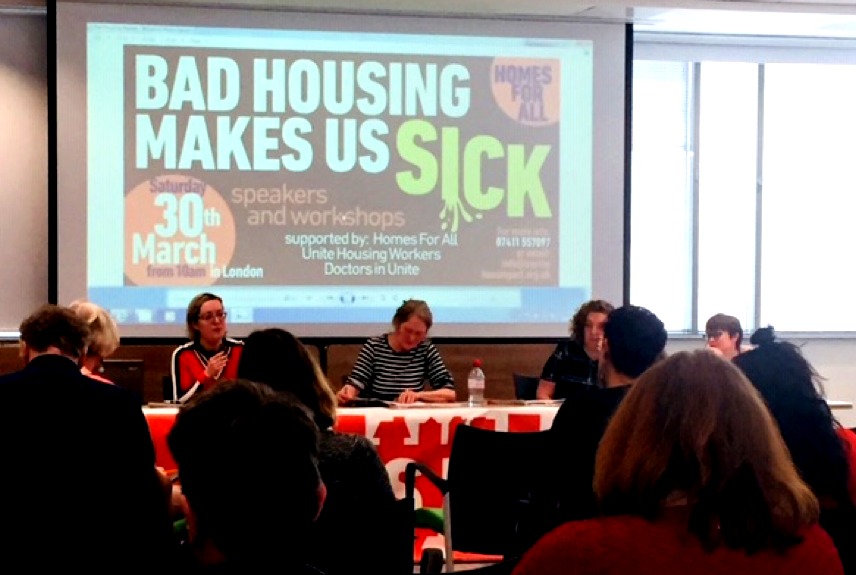
‘Bad housing makes us sick’ was a housing conference put together by Homes for All, Doctors Unite and Unite Housing Workers in London last Saturday. More than 100 people, including housing campaigners, doctors and health workers, trade union members and tenant representatives came together to share ideas and inspire new action plans. The brilliant guest speakers gave us all food for thought and below we share a summary of the topics that were discussed.

How the financialisation of housing is a global crisis

Raquel Rolnik, professor of urban planning at University of Sao Paulo, suggests that housing has moved on from being a valued

Raquel Rolnik

as a human right to being viewed as a commodity that is financially motivated. In the 1980’s both Thatcher in the UK and Regan in the US introduced schemes to sell off houses in public ownership; in the UK the ‘Right to Buy’ scheme gave council tenants an opportunity to buy their home, but as more and more housing has gone into private hands new social housing has not been built, leading to many countries having a rental market that has become a ‘finance playground’.

Watch Raquel Rolnik’s speech here.

Journalist Dawn Foster, who writes for the Guardian newspaper among others, highlighted that the Conservative Government’s recent ‘Help to Buy’ scheme, which was also put in place to encourage more home ownership, has been hijacked by large house building companies have used government subsidies to pay out big bonuses rather than lowering the house prices. Research show that the market prices was pushed up with as much as the government discount paid out, meaning that essentially, rather than make house prices more affordable, the cost has remained the same for the buyer and the profit has gone to the house builders.

In addition, the gap between rent and wages are growing. According to Shelter, between 2011 and 2017 the average rent increased by 16% nationally while wages only increased by 10%. But there are exceptions where the divide is much larger. In Barking and Dagenham, the wages in the same period only went up by 2%, but rents increased by 40%. The new benefits cap of £20,000 a year means that 97% of 2-bedroom properties on the privately rented market are unaffordable.

Dawn Foster

The panelists agreed that it is time to begin viewing housing as a human right again, and that to provide stable and secure housing for families, we should be focused on building more social housing and introducing rent controls. This is not only the ethical approach, but an affordable one: When the government invests in building social housing for everyone, in about 5-10 years the dwelling has paid for itself and the tenants rent payments go back into the accounts of local authorities, instead of to private landlords. Meanwhile, rent controls and longer tenancies within the private sector offers security to both landlords and renters, and prevents bigger landlords using the market as an investment and pushing up prices. This supports smaller landlords who have homes to rent and need the security of long term rent payments and tenancies.

Health in housing

Dr Jackie Applebee from Doctors Unite spoke about how bad housing is affecting health. Studies have suggested that homelessness can reduce life expectancy by 30 years and poor accommodation and living in poverty has a severe impact on life expectancy as well. People in temporary housing and social housing are often living in overcrowded conditions due to shortage of suitable properties. The lack of social housing or affordable housing means that people have to move more often, sometimes several times a year. Every time a household is relocated, they lose contact with their community and the support network that is available to them. Therefore, moving from a property affects social relationships and has a negative impact on mental health.

Terminus in Harlow is one example of how overcrowding affects mental and physical health. The 14 stories 1960’s office block has been turned into housing without needing planning permission. The very small rooms are filled with families and single residents from councils in and around London and they are often may miles away from places and people that they know. Crime has risen in the area with around 40% since the tower block was converted and families are scared to let their children out of the room. Therefore, there is no place for the children to play or do homework, and the adults have got no privacy. Jackie, who works as a GP in Whitechapel, has seen the impact that overcrowding has on health. She says that sharing a small space is likely to lead to infections as conditions spread easily, leaving people are more prone to illnesses.

Next, Hannah Slater from Generation Rent spoke about how the insecurity of the private rented market is another factor that can affect mental health. The private rented market is growing due to a shortage of council houses, along with a steep rise in houses prices that are forcing more people to rent. The Royal London suggests that half the children born in the UK are starting their lives in rented accommodation. Most tenancy contracts are ‘Assorted Shorthold Leases’ with only a 6 month agreement. And under Section 21 rules, the landlords can evict the tenant after the agreement has ended without providing a reason. This leads to families having to relocate, losing the community that they have created, as well as their relationship with healthcare professionals and services around them. Biomarkers used in a study have indicated that people living in rented accommodation have higher level of stress chemicals in their blood compared to home owners.

Figures show that a third of private rented properties fail basic health and safety checks due to problems with, for example, damp and mould. But Section 21 means that tenants do not have any security, and they avoid making any complaints about the property as they face being evicted if they do.

Due to the increasing number of private renters, political parties have started to take notice of housing campaigns as private renters now represent a large part of their constituency. The Mayor of London has promised to abolish Section 21, and the Labour Party has added it to their manifesto after pressure from campaigners. Another suggestion to increase the security for private renters is to have a national register of landlords and for Councils to have more control of licensing schemes that they apply for.

Coming together for action

The conference agreed on a few points of action that the difference groups and movements could work towards together. They included things like:

  • Supporting and building the 15th June ‘Grenfell – Never Again’ protest march in
    central London.
  • Ensuring housing rights are enacted and reinforced, backed by a strengthened independent tenant organisation.
  • Calling for an enforceable right to repairs for all tenants, linked to a
    regular inspection regime.
  • Advocating for grant funding for existing and new council housing.
  • Campaigning around connected issues such as Universal Credit, bringing empty properties into use, reducing temporary accommodation, the sale of public land and investment in the NHS.
  • Backing the Charter for Housing Action in 2019 and extend the alliance for action.
Posted by kineara in Community, Housing, Latest
Evictions and vulnerability in the private sector: Time for supportive solutions

Evictions and vulnerability in the private sector: Time for supportive solutions

This week, as we launch our new programme of support for private tenants, we reflect on rising vulnerability in the sector.


We know that a secure place to call home is essential for maintaining wellbeing. It provides the foundation for family life, personal wellbeing and work or educational opportunities. It is a place to rest, to recuperate, to raise children, and to gather with friends. It is enshrined as an international human right because of the intrinsic importance of shelter to our lives and our survival.

And yet, 21st century Britain does not guarantee this right. In the last 15 years, homelessness has exploded to record levels, effecting an increasingly broad segment of society and including many people in work and who are still unable to cover housing costs. As rental prices have surged and social or genuinely affordable housing is in short supply, it is the generally unstable, insecure and expensive private sector that is now housing low income, vulnerable people. The growth of the sector is what has contributed to the 100 evictions that are happening each day across the country.

However, the capacity of the sector as it is currently managed to provide secure, safe, quality and affordable living environments is still in question, despite many local authorities relying on private landlords to house their vulnerable residents. Local Housing Allowance has been cut since 2011 and frozen altogether since 2016, meaning it doesn’t come close to covering rents. In London, this means an average shortfall of £50 a week, and outside of London, £26 a week. This is having a compounded effect in a sector where there is reluctance to rent to housing benefit recipients in the first place.

Eviction from a privately rented home is also now the most cited reason for homelessness acceptances, and the quality and conditions of private rented homes at the bottom end of the sector is poor, bringing with it a host of health and wellbeing minefields that impact children and already vulnerable people disproportionately. There are also calls from landlords for access to information and support, with surveys in some parts of the country revealing two thirds of them have tenants with mental health problems that need support, and many of those landlords said they needed a place to find guidance. There is a growing movement of campaigners, advocates, policy makers and professionals calling for an end to short and insecure tenancies and stopping “No to DSS” practices, increased regulation through licensing and rent controls in the private sector.

What this means for vulnerable people

But while those policy changes are essential, it is also important that vulnerable people currently living in the sector have access to support. While registered housing providers in the social sector have a statutory responsibility to protect vulnerable adults (or ‘adults at risk’) under the Care Act 2014, in line with local authorities’ legal duties on housing the homeless or preventing homelessness, there is no such responsibility on the part of private landlords. In addition, since 2010, cuts to public services have bored a hole through the fabric of our communities, meaning that there are fewer places, whether local authority or community based services, to find advice or guidance during what is an extremely stressful experience.

And depending on definitions, who is deemed ‘vulnerable’ is rather expanded in the context of housing. Julie Rugg’s recent update to her review on the private rented sector, published at the end of last year, uses a broad definition of vulnerability to include households with dependent children, recent migrants, people with long-term sickness or disability, households in receipt of benefits, and households with residents over 65. This is an expanded definition which see’s ‘vulnerability’ as something largely inevitable at some point during the life course, and something that can happen to many people during their life as a consequence of any number of incidents that adversely affect a household’s income, like falling ill, or being made redundant.

What can we do?

RSP+ has been developed to tackle these issues by building partnerships with local authorities and their local landlords to find alternatives to evictions before they happen. This idea has been brewing for some time, and came into being after we participated in the Young Foundation’s brilliant ReimaginingRent programme, which support initiatives tackling challenges in the private sector.

The model works like this: Over 10 weeks, we work with vulnerable tenants with multi-complex needs to find a route away from eviction, whether the cause of the threat is a Section 21 notice, high rent arrears or other hidden challenges. We use holistic approaches to tackle the causes behind the causes, focusing on strengths, building confidence and community connection, and coupling emotional health with practical support. This means our practitioners can make a lasting difference in people’s lives, all the while avoiding the emotional, social and financial cost of eviction.

As private sector landlords are a varied group, it is often difficult for councils to have a full understanding of the sector, the standards of the housing on offer, and whether the rights and needs of tenants are being supported. So, RSP+ offers local authorities a route to greater understanding, communication and integrated working between councils and landlords for their residents.

You can find out more about the Rent Support Programme Plus (RSP+) on our website.

Partner with us

If you are from a local authority in London or the south east and would like to know more about the support, contact us for more information: info@kineara.co.uk // 020 3976 1450

Posted by kineara in Housing, Latest