community

Creativity Shines at the Better Together Community Expo

Creativity Shines at the Better Together Community Expo

Southwark | July 17th 2024

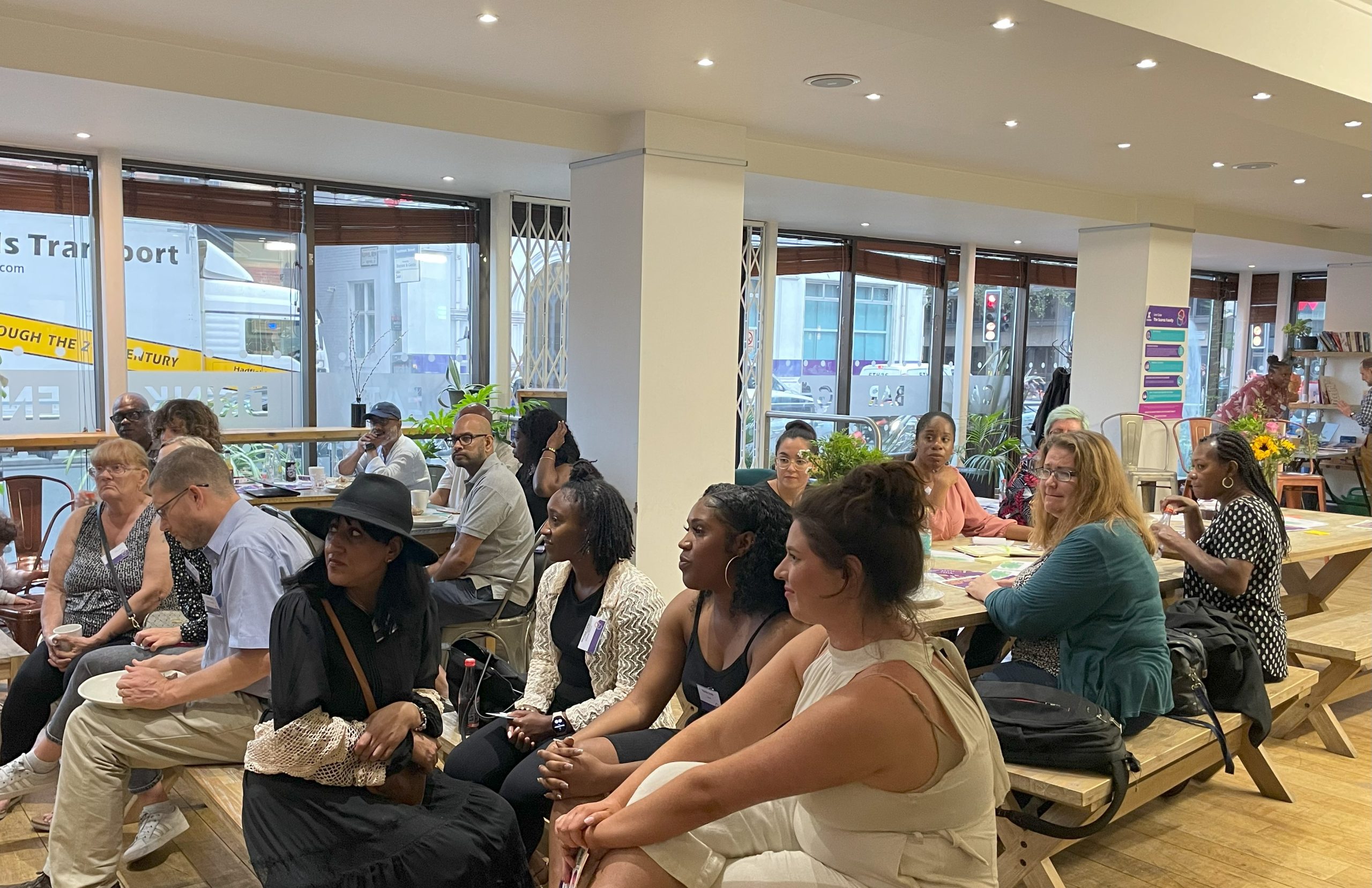
The Better Together Community Expo was more than just an event; it was a testament to the power of community and collaboration. Among the many highlights were the incredible contributions from a local hairdresser, reflexologist, student filmers, and creative artist. Here’s a closer look at their collaborative efforts and reflections on the day.

The Hairdresser’s Touch

Our local hairdresser, Kenny, brought a unique and personal touch to the Expo. Offering complimentary haircuts, Kenny not only boosted confidence but also created an opportunity for meaningful interactions.

It was fantastic to see so many smiling faces. Providing haircuts allowed me to connect with people on a personal level and offer a bit of self-care during the event.” – Kenny

Healing Through Reflexology

Louis, our skilled reflexologist, offered calming and therapeutic hand massage sessions with homemade herbal remedies that added a wellness dimension to the Expo. His services were a hit, providing much-needed relaxation and stress relief to attendees.

“I loved contributing to the community’s well-being. The Expo was a wonderful platform to introduce people to reflexology and its benefits.” – Louis

Capturing Moments: The Student Film Makers

Two talented student film makers, Renne and Kayla from Southwark College, documented the day’s activities, capturing the essence of the Expo. In the true spirit of partnership, their work will help us share the event’s impact and memories with a wider audience as well as giving them work to add to their portfolio. Check out their work below.

Creativity in Action

Giorgio, our creative artist, engaged attendees with interactive art sessions. These activities not only provided a creative outlet but also fostered a sense of connection and expression.

 “Art has a way of bringing people together, and this event was a perfect example of that. Seeing participants express themselves and connect through creativity was truly rewarding.” – Giorgio

Through the Lens: The Local Photographer

Our local photographer, Julian played a crucial role in preserving the memories of the Expo. With an eye for detail, Alex captured the vibrant moments and the essence of community spirit throughout the day.

 “It was a pleasure to photograph such a dynamic and positive event. Capturing the smiles, interactions, and energy of the day was incredibly rewarding.” – Julian

A Heartfelt Thank You

We extend our heartfelt gratitude to Kenny, Louis, our student filmers, and Giorgio for their incredible contributions. Their collaborative spirit added a unique and enriching dimension to the Better Together Community Expo, making it a memorable experience for all.

Stay tuned for more updates about future events. Together, we continue to build a stronger, more connected community.

 

Posted by kineara in Community, Education, Employment, Event, Housing, Latest
Maria Morgan addresses Healthy City Design Congress, advocating for building and sustaining better urban health through safe, secure housing

Maria Morgan addresses Healthy City Design Congress, advocating for building and sustaining better urban health through safe, secure housing

London | October 17th 2023

Kineara’s founder, Maria Morgan, last night delivered a compelling keynote talk at the recent Healthy City Design International Congress, emphasising the critical need housing and health equity in our communities. The event, sponsored by Kineara’s partner Impact on Urban Health (IOUH), provided a platform for Maria to highlight Kineara’s mission and work, and to discuss the urgent need for meaningful collaboration between housing and health sectors.

Maria addresses the audience at the keynote session

In her thought-provoking speech, Maria Morgan emphasized the importance of focusing on the most “vulnerable” individuals within our communities. The COVID-19 pandemic underscored the significance of our living spaces, highlighting the essential relationship between housing and health. During the pandemic, many communities experienced overcrowding, long-standing disrepair, loss of income, mental and physical health challenges, and financial concerns. Research shows that poor-quality housing has a significant impact on an individual’s health, costing the NHS billions each year.

Maria stressed the need for bold collaboration, learning from past mistakes, forward-thinking, and critical discussions regarding housing and health in challenging times, drawing attention to the fact that over 90% of Kineara’s clients experience high levels of stress and anxiety, leading to physical health issues, because of being housing insecure. She highlighted the importance of conferences like Healthy City Design in promoting urban renewal and health equity, where rich conversations and meaningful actions can take place.

The speech also drew attention to the basic human needs described by Maslow’s Hierarchy of Needs, with an emphasis on the first tier, which includes shelter. In this tier, challenges such as air quality, food poverty, housing affordability, and safety were noted. Maria Morgan called for a stronger focus on addressing these most basic needs for better health outcomes, so everyone, including the most vulnerable, can go on to play an active role in addressing issues such as climate change and creating thriving cities and communities.

It was encouraging to hear a growing appreciation and active acknowledgement from the building planning, architecture, and Urban renewal arenas, of the link between health and housing, and their work with councils in considering wellbeing in the design process.

With Impact on Urban Health’s involvement in the conference, I’m hopeful we will begin to see a growing presence of cross-sector collaboration from ground roots organisation, housing associations, designers, architects, and of course the voice of the community, contributing to these important conversations.

Maria Morgan

Maria’s speech served as a powerful call to action. Kineara’s holistic approach, its dedication to supporting vulnerable communities, and its advocacy for the critical relationship between housing and health act as a blueprint towards achieving healthier and more equitable urban environments.

Posted by kineara in Community, Event, Housing, Landlords, Latest
Empowering Collaboration in the Private Rented Sector: Kineara hosts event to discuss the highs and lows of renting in London and bust myths about landlords and tenants  

Empowering Collaboration in the Private Rented Sector: Kineara hosts event to discuss the highs and lows of renting in London and bust myths about landlords and tenants  

Southwark | September 20th, 2023 

We were thrilled to host an insightful event at The Bridge in Southwark, London, bringing together an inspiring mix of landlords, support workers, and other council stakeholders from the Private Rented Sector. The event aimed to foster collaboration, knowledge-sharing, and a deeper understanding of the challenges and opportunities faced by all those involved in the rental market and included a performance by Cardboard Citizens. Here’s a recap of the key highlights and takeaways from the event.

Creating Stronger Connections

One of the most remarkable aspects of the event was the sense of community and camaraderie that permeated the room. Landlords, support workers, and council stakeholders engaged in open dialogues, exchanging ideas, and sharing experiences. The event provided a place for attendees to network and build meaningful connections that we hope have the potential to lead to long-term collaborations.

Making licensing work for landlords

Local licensing plays a crucial role in improving standards in the sector, and the financial schemes that are available as a result support landlords to promote sustainable investments in the Private Rented Sector. During the event, attendees had the opportunity to learn about various financial schemes available in the local area. These schemes offer assurance to landlords who may have concerns about renting to tenants receiving benefits or support services. but also contribute to the overall stability of the rental market.

Kineara’s Tenancy Sustainment Support

Attendees also gained insights into how landlords can work collaboratively with support services like Kineara to avoid the cost and stress of eviction. The tenancy sustainment approach not only benefits renters but also contributes to a positive and mutually beneficial landlord-tenant relationship.

Challenging Stigmas and Fostering Understanding

Challenging stereotypes is essential in creating a fair and equitable rental market. Cardboard Citizens led the group with moving and powerful monologues, which were created using the real input of a tenant and a local landlord we’ve worked with and brought to life. Through insightful discussions, the event addressed the stigmas held about both landlords and tenants receiving support services and animated the variety of ways tenants and landlords feel about the housing crisis and how they negotiate it. By challenging these preconceptions, it is hoped that attendees left the event with a renewed commitment to building inclusive communities and providing a supportive environment for all stakeholders in the Private Rented Sector.

Future Prospects

The success of event has inspired us to plan more engaging gatherings in the future. We are committed to continuing our efforts in empowering both landlords and renters, and facilitating partnerships between landlords, support workers, and council stakeholders. Future events will build upon the knowledge shared and create even greater opportunities for growth and collaboration in the rental market.

Kineara’s founder, Maria Morgan, commented:

“I left the PRS networking event feeling energised about the possibility of building a network where everyone in the room feels safe to share their views and leaves feeling heard. Whether you are a landlord, tenant, estate agent, Council or support service. It’s potentially the beginning of something special, where a versatile collection of voices can have meaning and add understanding to the challenging complex landscape of housing.”

A Word of Thanks

We extend our sincere gratitude to all attendees who made the event a resounding success. Your active participation, valuable insights, and enthusiasm contributed to the event’s vibrancy and impact. We would also like to express our appreciation to the organisers, speakers, and contributors for their support in delivering and facilitating a much-needed conversation.

Stay Connected

We encourage all attendees to stay connected with us for updates on future events, workshops, and networking opportunities. Let’s keep the conversations going and work together to create a stronger, more resilient Private Rented Sector.

We look forward to seeing you all at our future gatherings, and together, let’s continue to make a positive impact in the rental market.

If you would like to be invited to our next event, please email Sandra Axell at saxell@kineara.co.uk

Posted by kineara in Community, Event, Housing, Landlords, Latest
Secretary of State Gives Green Light to One of the Nation’s Largest Landlord Licensing Schemes

Secretary of State Gives Green Light to One of the Nation’s Largest Landlord Licensing Schemes

Southwark | July 27th, 2023

Southwark Council has received approval from the Secretary of State to implement one of the country’s most extensive private landlord licensing schemes, signalling improved support for private renters.

This new scheme follows the introduction of two previous licensing initiatives: a borough-wide additional licensing scheme for Houses in Multiple Occupation (HMOs) and a smaller selective licensing scheme, initially piloted for 6 months, that covered about 6,000 properties and successfully rolled out thereafter for a five-year period.

The primary aim of the licensing scheme is to address renters’ major concerns, including unattended repairs, unresponsive landlords, and problems of damp and mould, which is a priority issue for the council. The scheme also intends to assist private tenants facing challenges related to the cost of living crisis, including fuel poverty.


Councillor Dora Dixon-Fyle, Cabinet Member for Community Safety, expressed satisfaction with the extended licensing scheme, emphasising the importance of working with landlords to improve housing standards and overall renting experience for residents.


This month, the selective licensing has been expanded to include a total of 19 out of the 23 wards in the borough. Starting from November 1 this year, additional wards will also require licensing to further enhance rental property standards and support private tenants in those areas.

Full article from Southwark Council here

Posted by kineara in Community, Housing, Landlords, Latest
London Housing Panel, Chaired by Kineara, Demands Urgent Action on Homelessness Crisis

London Housing Panel, Chaired by Kineara, Demands Urgent Action on Homelessness Crisis

London’s homelessness crisis has reached an alarming peak, with recent statistics revealing an exceptional number of households living in temporary accommodation since 2005. Amid this pressing situation, the London Housing Panel, in collaboration with London’s Deputy Mayor for Housing and Residential Development, Tom Copley, and the London Housing Directors Group, has taken a stand to address the plight of thousands of homeless households trapped in temporary housing.

Kineara, as the Chair of the Working Group on Temporary Accommodation under the London Housing Panel, has played a central role in drafting and coordinating the delivery of the open letter to the government, demanding immediate action.

The Crisis at Hand

The open letter, addressed to the Rt Hon Michael Gove MP, Secretary of State for Levelling Up, Housing and Communities, expresses collective alarm over the escalating homelessness crisis in London. While homelessness is a nationwide issue, it has hit the capital particularly hard, with nearly 60% of all households in temporary accommodation located in London. The situation is compounded by an unprecedented crisis in the procurement, supply and low standard of temporary accommodation, making it more critical than ever to find sustainable solutions.


Call for Government Action

One of the Working Group’s primary objectives is to advocate for improved housing conditions and support vulnerable individuals and families stuck in temporary accommodations that are often not fit for purpose and are far from temporary.


In the letter, the collective demands urgent government intervention to address the key challenges faced by those in temporary housing. One critical concern is to ensure that stays in temporary accommodation are as short, safe, and healthy as possible, with a strong emphasis on finding permanent homes swiftly. The Working Group calls for an increase in Discretionary Housing Payment funding to support local authorities during this crisis.


Key Proposals for Action

The open letter highlights three essential areas that demand immediate attention:

  1. Preventing Homelessness: The letter urges long-term investment in new and existing social rented homes as the most effective way to reduce the number of households in temporary accommodation and address housing inequalities. Raising Long-term Local Housing Allowance (LHA) levels is essential to prevent further homelessness and facilitate local authorities in sourcing suitable temporary accommodation.
  2. Raising Standards: The inconsistency and poor standards in temporary accommodation pose significant challenges. The Working Group calls for new, enforceable national standards consistent with decent homes standards, applicable to all properties used for temporary accommodation, irrespective of ownership or immigration status.
  3. Children in Temporary Accommodation: Kineara and the Working Group is dedicated to placing all children housed in temporary accommodation under the Children Act or homelessness legislation, ensuring that they have access to proper kitchen facilities. Additionally, the proposal includes the development of manuals in every borough to aid families settling in and accessing essential support services.

    Conclusion

    The collaboration between the London Housing Panel, London’s Deputy Mayor for Housing and Residential Development, and the London Housing Directors Group, with Kineara’s leadership, has led to a powerful call to action. The open letter demands immediate government attention to alleviate the hardships faced by homeless households in London. It is hoped that the government will respond promptly and work alongside various stakeholders to find comprehensive and sustainable solutions to the city’s growing homelessness crisis.

To read the full open letter, click here

Posted by kineara in Community, Housing, Latest
Back to school: Supporting pupil wellbeing online

Back to school: Supporting pupil wellbeing online

Almost two years in, you’ve seen how the Covid-19 pandemic has impacted your school, pupils, and families. In addition to delivering education support such as pupil counselling,  Kineara is undertaking a research project in collaboration with TeacherTapp to identify and explore the needs and challenges facing schools during these uncertain times. The first data set comes from 6,435 schools indicating what type of support they would benefit from in an online/digital format. Below is a snapshot of the results.  

Key findings:  

  • Pupil counselling was the most popular form of digital/online support. In particular, this was the top response for teachers working in secondary schools.
  • Results from both primary and secondary schools reinforced the importance of whole family support and early intervention. Additionally, drop-in support, family sessions, and family therapy were top responses from primary schools.
  • As expected, there was generally a higher level of support needs identified by schools working in deprived areas compared to their more affluent counterparts. Drop-in support for parents, family sessions, and family therapy were the most popular responses among Q4 (deprived) schools. Notably, however, private secondaries also indicated a high level of need for pupil counselling. This shows that despite the socioeconomic advantage afforded to  pupils from more affluent areas, there remains a need to address mental health and wellbeing among all children and young people.
  • Family sessions and family therapy was the most requested from state primaries (61%), while parents drop-in support was the strongest need among private primaries. Additionally, pupil counselling was the most popular answer among both private secondaries (48%) and state secondaries (59%).

Free resource (limited time only!):   

We are really happy to be sharing our free PDF resource containing proven activities to support mental health and wellbeing for primary and secondary school pupils alike. It comes with full instructions, key benefits, and our top tips on adapting our resource to different contexts. We hope you find it helpful!  

Download your free resource here

To find out more about our education support in schools or if you have any questions about the above, book a friendly chat with us today. Contact us at: info@kineara.co.uk or call 020 3976 1450.  

Posted by kineara in Education
Practitioner Insights: Five ways to ease loneliness and disconnection

Practitioner Insights: Five ways to ease loneliness and disconnection

What is the difference between feeling lonely and being alone? When you feel alone – even around other people – you may be feeling disconnected. Perhaps your needs are not being met, you are not connecting with people on a meaningful level, or you are going through hidden challenges or experiences nobody else knows about. This Loneliness Awareness Week, we share insights on the value of actively listening and connecting to ease loneliness. You can use these tips to ease loneliness and disconnection in yourself and others. As an organisation that provides valuable support, you may also find these insights helpful.  

1. Actively listening:  

When going through challenges you may feel like your voice isn’t being heard, which can fuel feelings of loneliness, resentment, stress, anger and tension. Making an effort to listen to others – not just listening to give a reply but really actively listening – can be a great starting point for easing these feelings and building a meaningful connection. Sometimes we want to fix everything and give solutions and advice, but for some people real active listening and feeding back what they have said can be even more powerful. 

Action: Make an effort to listen –not just listening to give a reply but really actively listening. 

2. Meaningfully connecting  

When you feel alone even around other people, you may be feeling disconnected. Try connecting with yourself first and foremost to better understand: Why do you feel like this? Do you crave more meaningful relationships? What is your definition of friendship? Are you working through a challenge or trauma in your life? Recognising your feelings may help you decide what you need to do to feel better. If you believe someone close to you may be feeling like this, try strengthening your own relationship with them by setting meaningful time to just talk and be together with no judgement or expectations.  

Action: Try connecting with yourself to better understand why you are feeling this way. Set meaningful time with yourself and others to strengthen your relationships.  

3. Authentically expressing 

It can be difficult to connect with others when you have your guard up or dismiss your own authentic self. This, coupled with societal factors and expectations, can contribute to feelings of disconnection with others and/or in group settings. Try seeking outlets to express yourself such as connecting with close friends and family and/or doing activities that bring you joy. Expressing yourself authentically in a way that you are comfortable with is valuable for your own mental health and wellbeing. Taking some time out to recharge your social meter is important too.  

Action: Try seeking different ways and outlets to express yourself like connecting with close friends and family and doing activities that bring you joy. Take time out to recharge your batteries too.  

4. Sincerely asking  

Asking questions to yourself and others can help to generate better solutions to problems and uncover different challenges. It can also help you remain open, non-judgemental and sincere in supporting yourself and others. “I care about you. Is there anything I can do to help you work through this?” “May I help you find someone who can support you?” “How would you like things to be different?” Remember to check in regularly with yourself too.  

Action: Ask open-ended, non-judgmental and sincere questions to generate better solutions to problems and uncover different challenges. Check in regularly with yourself too. 

5. Holistically supporting  

When you’re talking to someone, it helps to see that person as a system – in that system is a person, their needs, background, parentage, education, culture, faith etc. You’re not seeing a situation or a person as one-dimensional but seeing them in a holistic frame. At Kineara, our support is holistic and tailored to the needs of the individual and family. This means we look at the bigger picture, addressing different challenges they may be facing in life, including issues with rent or housing insecurity, emotional wellbeing, or household needs and relationship. Although holistic working is a specialism, it helps to recognise this approach, be aware of those other issues, and bring in specialist support as needed. 

Action: Connect with support services that add value and find out more about holistic support. 

Helpful links  

Marmalade Trust – A charity dedicated to recognising loneliness, helping people make new friendships and connections, and hosting Loneliness Awareness Week.  

Apply For Help – WaveLength – Wavelength has really helped our clients who have been isolated and many have lost everything through homelessness. To be able to listen to music or watch a television has really helped their mental health. 

Digital Inclusion Project – Many of us were fortunate enough to get through lockdown with a phone, computer and the internet. But there were many who couldn’t FaceTime or Zoom their friends and family, they had little or no contact with others. Our digital inclusion courses help people gain confidence so that they become digitally independent and connected to the services and networks they need. 


Posted by kineara in Community, Health and Wellbeing
Practitioner Insights: Back to school after the coronavirus lockdown – Tips for parents and carers

Practitioner Insights: Back to school after the coronavirus lockdown – Tips for parents and carers

The transition back to school will undoubtedly be challenging for pupils and their families – from difficult experiences at home to re-adjusting to their normal routines. Drawing on the experience of our Education lead practitioner Gail McNelly, this post explores practical tips for parents, carers, and families.

We know that families living in precarious situations, facing financial hardship, and going through other challenging times have borne the brunt of the lockdown period. For many of the families we work with, the closure of schools, afterschool clubs and centres has been particularly tough, in addition to increased mental health and wellbeing concerns. Due to these challenges and more, it is important that parents and families are informed and feel supported during this transition.

Tips for parents, carers, and families

  1. Try your best to stay informed

As schools continue to review their safeguarding and child protection guidelines, it is also important that as parents you stay informed of policies as they change. Try your best to engage with the school by speaking to teachers and anyone else involved in your child’s learning about any concerns you may have. You can also read more information for parents and carers about returning to school post-lockdown including the policies on wearing face coverings.

  1. Get talking

Our recent Motivate to Educate (M2E) survey found that 75% of parents felt that Covid-19 has impacted on the mental health and wellbeing of the family, including 50% indicating an impact on family communication.  It is therefore more important than ever to talk to your child about what is going on and how they are feeling about going back to school. This may include talking about going back to the normal school routine which is one they will have to re-adjust to. Here are some more practical tips and conversation starters you can start to implement by Young Minds.

  1. Explore different activities with your children

Connect with your child and their interests by doing activities together like cooking, decorating, exercising, family yoga, making art, playing board games, or going to the park. You could help them to explore their feelings and ways to manage them by reading our previous #PractitionerInsights post and utilising the Time for Us pack. There are also online resources to support home learning including these checklists from the Education Endowment Foundation.

  1. Re-introduce daily routines

One parent who took part in our M2E survey said the lockdown had affected their “routines, family time and having a bit oschoolwork.” Further to this, Gail found that the lockdown period saw many children turning to technology and gaming which, in some cases, had affected their daily routines including eating and sleeping patterns. As schools re-open, it is important to help your child return to their normal sleeping and eating routines, particularly during the first few weeks of school which they may be the most challenging. You could start by checking out this guide on improving sleep by the Mental Health Foundation.

  1. It is okay if you struggle

For those of you who have felt particularly isolated, concerned, or fearful during this lockdown period, returning to school will of course be challenging and daunting.  Things will take time to get used to – try to stay patient with yourself and your children. You could explore different coping strategies that work for you when you are feeling stressed out like connecting with nature, meeting friends and family and breathing techniques. How you look after your own wellbeing will impact on the wellbeing of your children.

We are developing an exciting addition to our education support which will include a package of online support and training for schools, to help school adapt their support services to the post-Covid world. If you work in a school or have links with people in education, we’d love your thoughts and feedback. Take our short survey here.

More helpful links

Relief and support during Covid-19: A list of links and resources by Kineara

Supporting autistic children during the coronavirus pandemic plus some helpful resources by Kineara

Practitioner Insights – Tips for schools and educators

Helpful resources and downloads for parents and families by Family Links

Find out more about our education services

Posted by kineara in Education
Practitioner Insights: Back to school after the coronavirus lockdown – Tips for schools and educators

Practitioner Insights: Back to school after the coronavirus lockdown – Tips for schools and educators

As schools reopen their doors in the coming weeks, the transition will of course be challenging for everyone involved. Drawing on the experience of our Education lead practitioner Gail McNelly, this post focuses on how we can begin to identify and respond to these heightened challenges, namely safeguarding, child protection and wellbeing concerns in order to support everyone at school.  

  1. Recognise the challenges facing pupils and their families

While generally experiences have been varied during the lockdown period, we’ve seen how families living in precarious situations, facing financial hardship, and going through other challenges including mental health and wellbeing have borne the brunt of the lockdown. Some of these families have felt particularly isolated and fearful, while others have experienced loss and bereavement. Together with reviewing policies and procedures as things continue to change, it is vital that school staff are aware of the different challenges that families have faced in order to identify how best to safeguard and protect wellbeing at school. You could begin by engaging and regularly checking in with pupils and their families to find out about their concerns.

  1. Introduce creative check-ins and wellbeing activities

In our recent Motivate to Educate (M2E) survey, 75% of parents indicated that Covid-19 has impacted on the mental health and emotional wellbeing of the familyincluding 50% indicating an impact on family communication. Thus, in addition to these wellbeing activity ideas for schools by Place2Be and Young Minds, Gail suggests that checking in with pupils through an “emotions meter” and “emoji game” could be very helpful for pupils and school staff alike – this is something that Kineara will be developing further. Talking to children about any concerns they may have, what they liked about lockdown, what they didn’t like about lockdown is important – and integrating this into a group activity could be even more effective. “Teachers could check-in with pupils by integrating it with the register,” suggests Gail.

  1. Connect with pupils in a way that resonates with them

Some pupils may be reluctant to share things or even follow guidelines during this time which can impact further on their safety and learning and those around them. If you are supporting a pupil 1:1, show that you are here for them. As you get to know your pupil, try to engage in a way that resonates with them. Don’t ignore the elephant in the room – ask them how they are feeling about the pandemic and acknowledge this without minimising or dismissing their concerns. Try to have open conversations by doing different activities like reading or drawing together – this will help to break the ice and allow them to express themselves better.

  1. Adapting to digital teaching and learning

“Although different organisations including Kineara were running online check-ins and other virtual services, it hasn’t been easy. We were giving them tips and sending ideas for different family activities which some of them were doing. However, a lot of  parents were even scared to go out for a walk because of the virus so I did do some work around that,” explains Gail. One parent and survey respondent who took part in our M2E programme highlighted social distancing as a barrier, “We can’t do many activities outside like swimming, going to church, clubs and cinema due to social distancing.” This means that it may take some time for pupils to be back in school every day, particularly pupils with SEND, which could result in a combination of in-school and virtual teaching – the NSPCC has put together this helpful guide relating to this including how to undertake remote teaching safely.  In the coming months, this reality could also mean a wider review on adapting teaching and other services in the mid to long-term.

We are developing an exciting addition to our education support which will include a package of online support and training for schools, to help school adapt their support services to the post-Covid world. To help us develop this, we’d love your thoughts and feedback. Take our short survey here.

Helpful links and resources

NSPCC has put together this transitioning back to school resources pack

Young Minds has a range of resources for schools, teachers and support practitioners including tips to support pupils during Covid-19 and the transition back to school

EEF has launched a range of resources to support schools to address the impact of Covid-19 school closures on pupils’ learning and support home learning.

My Tutor has shared this interview with NHS Psychologist on what parents can do to prepare their kids to return to school 

Support, guidance and activity suggestions for schools by Mentally Healthy Schools

5 ways to help keep children learning during the COVID-19 pandemic by Unicef

Posted by kineara in Education
Supporting the recovery of our communities

Supporting the recovery of our communities

As the impacts of Covid-19 and the lockdowns on our communities are becoming clearer, the inequality in society has been laid bare.

For us and many other organisations working with ‘vulnerable’ people, the reality of life at the sharp end of that inequality has always been acutely challenging, particularly when barriers to secure housing, stable employment, positive mental and physical health, and meaningful connections to community combine.

As a result, many of the impacts we are seeing are not new to us, they are only exacerbated by the unequal effect of both the Covid-19 illness and the lockdowns that have been put in place to contain it.

Supporting your needs

Kineara has broad experience working with people with complex needs to address concerns over housing, mental health, family support, and employment. This support is both practical and emotional, and our practitioners use holistic approaches that can include anything from writing housing applications to counselling sessions.

We also provide consultation and supervision to housing associations and schools, so we can support your own frontline staff to identify and support those people that need more complex care.

We know that many organisations will be at low capacity right now, just when the demand for support is greatest. Whether you are a housing association, school or local authority, you will likely have seen the gaps in provision and the challenges that people in your communities face, as the lack of funding, availability of staff, and the severity of the impacts of Covid-19 on the vulnerable becomes clear.

We can support you to prevent people falling through those gaps.

But we want to hear from you – if you are a school, housing association or local authority, get in touch! There are many ways that we may be able to provide you the support your community needs as we begin to address the effects of the pandemic, including over-the-phone supervision and consultation, trainings, support interventions for vulnerable residents or communities, and more.

Posted by kineara in Community, Education, Housing, Latest